


As consumers become more interested in sustainable pet-care products, biomass-based cat litter has emerged as an attractive alternative to traditional mineral litter. Biomass materials such as sawdust, wood shavings, soybean residue, corn fiber, wheat straw, rice husk, bamboo fiber, and other agricultural by-products can potentially be processed into absorbent cat litter pellets.
Turning biomass into cat litter pellets is not simply a matter of pressing raw materials through a pellet mill. The biomass must be properly cleaned, crushed, ground, dried, mixed, conditioned, pelletized, cooled, screened, and packaged. Product formulation also needs to be optimized for absorption, durability, dust control, odor management, and, when required, clumping performance.
A well-designed cat litter manufacturing system integrates these processes into an efficient production line. This article explains how to make cat litter pellets from biomass step by step, what materials can be used, what equipment is required, how to control product quality, and how to build a commercial biomass cat litter production plant.
1. What Are Biomass Cat Litter Pellets?
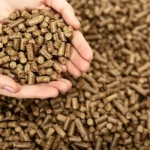
Biomass cat litter pellets are granular or pelletized products made primarily from plant-based materials.
Potential biomass feedstocks include:
- Sawdust
- Wood shavings
- Wood fiber
- Soybean residue
- Soybean fiber
- Corn fiber
- Wheat straw
- Rice straw
- Rice husk
- Bamboo
- Cassava residue
- Other agricultural by-products
These materials contain fibers or porous structures that can contribute to liquid absorption.
Depending on the formulation, biomass pellets can be manufactured as:
- Non-clumping cat litter
- Clumping cat litter
- Odor-control litter
- Lightweight litter
- Fine-particle litter
- Coarser pellet litter
The final characteristics depend on both the raw material and the manufacturing process.
2. Why Use Biomass for Cat Litter?
Biomass can provide several potential advantages for cat litter manufacturing.
Renewable Resources
Many biomass materials originate from agricultural or forestry activities and can be replenished.
Agricultural Waste Utilization
Residues such as soybean fiber, wheat straw, and corn by-products can be converted into value-added products.
Local Raw Material Availability
Manufacturers can potentially source suitable biomass near the production facility.
Lightweight Characteristics
Some plant-based litter products can be lighter than mineral-based alternatives.
Product Differentiation
Biomass-based litter can be positioned as an alternative for customers interested in plant-based products.
However, manufacturers should evaluate sustainability across the entire product lifecycle, including raw material sourcing, processing energy, transportation, and packaging.
3. Choose the Right Biomass
Not every biomass material is suitable for cat litter.
The ideal material should have appropriate:
- Absorption
- Fiber structure
- Moisture content
- Cleanliness
- Particle characteristics
- Pelletizing performance
- Odor characteristics
- Storage stability
For example, clean sawdust from suitable untreated wood may be a good feedstock for wood-based litter.
Soybean residue can be considered for tofu-style cat litter.
Corn fiber and wheat fiber can also be processed into plant-based litter.
Raw material testing should be conducted before industrial production.
4. Sawdust as a Cat Litter Raw Material
Sawdust is one of the most accessible biomass materials for pellet production.
A typical wood-based process is:
Sawdust → Cleaning → Grinding → Drying → Pelletizing → Cooling → Screening → Packaging
If the sawdust already has the correct particle size and moisture, the crushing and grinding stages may be reduced.
Sawdust can produce relatively lightweight pellets and can be combined with suitable additives to improve absorption and odor management.
5. Soybean Residue for Cat Litter
Soybean residue is another potential raw material.
It is generated during tofu and soy-product processing.
Because fresh soybean residue can contain significant moisture, drying is usually an important part of the process.
A typical process is:
Soybean Residue → Drying → Grinding → Mixing → Pelletizing → Drying → Cooling → Screening → Packaging
Starch or another suitable binder may be used when stronger clumping is required.
6. Agricultural Straw
Wheat straw, rice straw, and other agricultural fibers can also be considered.
The basic process may include:
Straw → Chopping → Grinding → Drying → Mixing → Pelletizing → Cooling → Screening
However, straw can have relatively long fibers and may require more intensive size reduction before pelletizing.
Manufacturers should also evaluate ash, contaminants, odor, and absorption characteristics before using agricultural residues in cat litter.
7. Bamboo Fiber and Other Biomass
Bamboo processing residues can provide another potential feedstock.
Other possible materials include:
- Corn stalk fiber
- Peanut shell
- Grass fiber
- Cassava residue
- Other clean plant-processing by-products
Each material has different physical and chemical properties.
Therefore, the same production settings should not automatically be applied to every biomass material.
8. Test Biomass Before Production
Before purchasing a complete production line, raw materials should be tested.
Important tests include:
Moisture Content
High moisture increases drying requirements.
Particle Size
Determines grinding requirements.
Bulk Density
Affects transportation and pellet density.
Absorption
Determines basic litter performance.
Fiber Structure
Influences pellet formation.
Pelletizing Performance
Determines whether the biomass can be efficiently formed into pellets.
Odor
The raw material should not introduce undesirable odors into the finished product.
Testing provides important information for equipment and formula design.
9. Develop the Cat Litter Formula
Biomass alone may not provide all the characteristics required for commercial cat litter.
A formula may include:
- Main biomass material
- Starch
- Natural or suitable binder
- Odor-control additives
- Activated carbon
- Other functional ingredients
The formula should be optimized for:
- Absorption
- Clumping
- Pellet durability
- Dust
- Odor control
- Density
- Cost
Different markets may require different product specifications.
10. Biomass Cat Litter Production Process
A complete biomass cat litter process can be organized as:
Raw Material Receiving → Cleaning → Crushing/Chopping → Grinding → Drying → Batching → Mixing → Moisture Adjustment → Pelletizing → Drying → Cooling → Screening → Odor Treatment → Packaging
Not every biomass product requires every step.
For example, dry and fine sawdust may bypass intensive crushing.
Wet soybean residue may require more drying capacity.
The process should therefore be customized according to the raw material.
11. Step 1: Raw Material Receiving
Biomass enters the factory through a receiving system.
The system may include:
- Receiving hopper
- Conveyor
- Feeder
- Storage bin
Large factories may use automatic feeding systems to reduce manual labor.
Raw materials should be stored in a dry and clean environment.
Moisture and contamination should be controlled during storage.
12. Step 2: Cleaning Biomass
Raw biomass can contain foreign materials.
Cleaning equipment may remove:
- Stones
- Soil
- Metal
- Plastic
- Other contaminants
Magnetic separators can remove ferrous materials.
Screens can separate oversized particles.
Cleaning protects downstream equipment and improves final product quality.
13. Step 3: Crushing or Chopping
Large biomass materials require size reduction.
For example:
- Wood chips
- Straw
- Bamboo pieces
- Large agricultural residues
A crusher or chopper reduces the material to a manageable size.
This makes subsequent grinding more efficient.
14. Step 4: Grinding
A hammer mill can further reduce the biomass to a more uniform particle size.
Grinding affects:
- Pellet formation
- Pellet density
- Surface quality
- Durability
- Absorption
The optimal particle size depends on the raw material and pellet specifications.
Over-grinding should be avoided because it increases energy consumption and may generate excessive dust.
15. Step 5: Drying
Moisture control is one of the most important parts of biomass pellet production.
Biomass may enter the factory with variable moisture levels.
A rotary dryer or other industrial drying system can reduce moisture to an appropriate level.
Drying performance depends on:
- Initial moisture
- Target moisture
- Feed rate
- Air temperature
- Residence time
- Material characteristics
Efficient drying can significantly reduce production costs.
16. Step 6: Batching
If several ingredients are included, accurate batching is necessary.
A batching system can measure:
- Biomass
- Starch
- Binder
- Odor-control ingredients
- Other additives
Automatic batching helps maintain consistent formulas.
For large factories, batching equipment can be connected to a centralized PLC control system.
17. Step 7: Mixing
After batching, the ingredients are thoroughly mixed.
A commercial mixer ensures that the biomass and additives are evenly distributed.
Uniform mixing is important when using:
- Starch
- Binders
- Activated carbon
- Odor-control additives
Poor mixing can result in inconsistent pellet quality and uneven product performance.
18. Step 8: Moisture Adjustment
The mixture may require additional moisture before pelletizing.
A controlled spraying system can add water.
The moisture level should be monitored carefully.
If the material is too dry:
- Pellet formation may become difficult.
- Pellet durability may decrease.
If it is too wet:
- Pellets may become soft.
- Drying costs may increase.
- Material may stick inside equipment.
Proper moisture conditioning improves pelletizing stability.
19. Step 9: Pelletizing Biomass
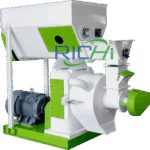
The pellet mill is the core forming machine in many biomass cat litter production lines.
Prepared biomass enters the pellet mill and is compressed through a die.
Pressure causes the material to form continuous pellets.
A cutter determines the approximate pellet length.
Pelletizing affects:
- Shape
- Density
- Strength
- Particle size
- Surface characteristics
The die specification should be selected according to the desired cat litter pellet size.
https://pelletisingmachine.com/cat-litter-pellet-machine
20. How Pellet Density Affects Cat Litter
Density is an important product characteristic.
Highly compressed pellets may be stronger but can behave differently during liquid absorption.
Less dense pellets may absorb liquid more quickly but could break more easily.
Therefore, the manufacturer needs to find a balance between:
- Strength
- Absorption
- Dust
- Density
- Handling
This is normally achieved through product testing and adjustments to raw material preparation and pellet mill settings.
21. Step 10: Dry the Pellets
Fresh biomass pellets may contain excess moisture after forming.
A dryer can stabilize them.
The drying system should remove sufficient moisture without causing excessive breakage.
Important factors include:
- Dryer temperature
- Airflow
- Feed rate
- Residence time
- Pellet size
- Initial moisture
Stable moisture improves storage and packaging performance.
22. Step 11: Cool the Pellets
After drying, the pellets should be cooled before final screening and packaging.
A cooler can:
- Reduce temperature
- Improve storage stability
- Reduce condensation
- Prepare pellets for packaging
Cooling also helps prevent moisture migration inside packaged products.
23. Step 12: Screen the Pellets
Screening removes:
- Powder
- Broken pellets
- Oversized pellets
- Irregular particles
A vibrating screen can separate particles according to size.
Finished product specifications should define the acceptable particle-size range.
Suitable fines may be recycled into the production process.
This can reduce waste and improve raw-material utilization.
24. Step 13: Add Odor-Control Ingredients
Biomass litter can be formulated with odor-control materials.
Potential ingredients include:
- Activated carbon
- Suitable mineral adsorbents
- Plant-derived odor-control materials
These ingredients may be added during mixing or applied using a coating system.
The objective is to improve odor management without negatively affecting absorption or clumping.
25. Step 14: Control Dust
Low dust is important for cat litter quality.
Dust may be generated during:
- Grinding
- Pelletizing
- Drying
- Cooling
- Screening
- Conveying
- Packaging
A dust collection system can include:
- Cyclone
- Baghouse filter
- Exhaust fan
- Ductwork
Better pellet durability and effective screening can also reduce finished-product dust.
26. Step 15: Package the Finished Product
Once the litter has passed quality inspection, it can be packaged.
A packaging system may include:
- Automatic weighing machine
- Bagging machine
- Sealing machine
- Conveyor
- Coding system
Typical retail sizes may include:
- 5 kg
- 6 kg
- 10 kg
- 15 kg
The packaging should protect the product against moisture and contamination.
27. What Equipment Is Needed?
A commercial biomass cat litter plant may require:
Raw Material Handling
- Receiving hopper
- Storage bins
- Conveyors
- Feeders
Pretreatment
- Cleaner
- Crusher
- Chopper
- Magnetic separator
Grinding
- Hammer mill
- Cyclone
- Dust collector
Conditioning
- Dryer
- Batching system
- Mixer
- Moisture spraying system
Pelletizing
- Pellet mill
- Die
- Rollers
- Forced feeder
Post-Processing
- Dryer
- Cooler
- Vibrating screen
- Coating machine
Packaging
- Automatic weighing machine
- Bagging machine
- Sealing machine
- Conveyor
The final equipment list should be customized according to raw material and production capacity.
28. How to Build a Cat Litter Manufacturing System
A complete cat litter production line should be designed as an integrated process rather than as a collection of individual machines.
The basic material flow should be:
Raw Material → Pretreatment → Grinding → Drying → Mixing → Pelletizing → Drying → Cooling → Screening → Treatment → Packaging
The capacity of each section should be properly matched.
For example, the grinding system should provide enough material for the pellet mill, while the dryer should be capable of handling the pellet mill’s output.
This avoids bottlenecks.
29. Small-Scale Biomass Cat Litter Production
A small-scale business can use a relatively simple system.
For dry sawdust, for example:
Hammer Mill → Mixer → Pellet Mill → Dryer → Cooler → Screen → Packaging
If the sawdust is already fine and dry, the hammer mill may not be required.
A semi-automatic packaging machine can reduce the initial investment.
Small-scale production is useful for:
- Local markets
- New brands
- Product testing
- Small distributors
30. Large-Scale Biomass Cat Litter Production
A large factory can use a fully automated system:
Automatic Receiving → Cleaning → Crushing → Grinding → Drying → Batching → Mixing → Moisture Conditioning → Pelletizing → Drying → Cooling → Screening → Coating → Packaging → Palletizing
PLC control can coordinate the entire process.
Automation can improve:
- Production consistency
- Material utilization
- Labor efficiency
- Process monitoring
- Production capacity
31. How to Improve Biomass Pellet Quality
Several factors influence pellet quality.
Raw Material Quality
Clean and consistent biomass is essential.
Particle Size
Uniform particles generally improve pellet formation.
Moisture
The material should have appropriate moisture before pelletizing.
Formula
Binders and additives should be accurately dosed.
Pellet Mill Settings
Die and roller conditions influence pellet density and strength.
Cooling
Proper cooling improves storage stability.
Screening
Removing excessive fines improves finished-product quality.
32. How to Improve Absorption
Absorption can be improved by optimizing:
- Biomass type
- Particle structure
- Pellet density
- Pellet size
- Formula
- Drying conditions
Different biomass materials have different natural absorption capacities.
Manufacturers should conduct laboratory and practical tests rather than assuming that all biomass materials will perform equally.
33. How to Produce Clumping Biomass Cat Litter
If the goal is to produce clumping litter, the formula must be specifically designed for clumping performance.
Potential components include:
- Absorbent biomass
- Starch
- Plant-based binder
- Functional additives
The product should be tested for:
- Clump formation speed
- Clump strength
- Liquid retention
- Breakage
- Ease of scooping
The ideal product should form a stable clump without becoming excessively dusty.
34. How to Reduce Production Costs
The main costs of biomass cat litter production may include:
- Raw materials
- Electricity
- Heat
- Labor
- Packaging
- Maintenance
- Transportation
Manufacturers can reduce costs by:
- Using locally available biomass
- Purchasing appropriately dried materials
- Optimizing dryer operation
- Avoiding unnecessary grinding
- Recycling suitable fines
- Automating material handling
- Performing preventive maintenance
Energy-efficient drying can be particularly important because biomass moisture varies considerably.
35. Environmental Considerations
Biomass-based litter can contribute to resource utilization, but production should still be designed responsibly.
Manufacturers can consider:
- Local raw-material sourcing
- Efficient drying
- Dust collection
- Waste reduction
- Recycling production fines
- Energy-efficient motors
- Efficient heat utilization
- Appropriate packaging materials
Environmental performance should be evaluated across the complete manufacturing process.
36. Quality Control for Biomass Cat Litter
A professional factory should establish quality standards for every production stage.
Incoming raw materials should be checked for:
- Moisture
- Cleanliness
- Particle size
- Odor
Finished products should be tested for:
- Moisture
- Absorption
- Density
- Particle size
- Pellet durability
- Dust
- Clumping
- Odor control
Consistent quality is essential for building a reliable cat litter brand.
37. Choosing the Right Equipment Supplier
Equipment selection has a major impact on project success.
When comparing suppliers, consider:
- Engineering experience
- Equipment quality
- Raw material adaptability
- Production capacity
- Energy efficiency
- Automation
- Installation
- Commissioning
- Training
- Spare parts
- After-sales support
A supplier capable of providing an integrated production line can help reduce compatibility problems.
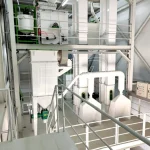
38. RICHI Cat Litter Manufacturing System
RICHI Manufacture provides customized cat litter manufacturing system solutions for manufacturers processing biomass and other suitable raw materials.
Depending on the project, the production line can include:
Raw Material Receiving → Cleaning → Crushing → Grinding → Drying → Batching → Mixing → Moisture Adjustment → Pelletizing → Drying → Cooling → Screening → Coating → Packaging
The system can be customized according to:
- Sawdust
- Soybean residue
- Corn fiber
- Wheat straw
- Bamboo fiber
- Other suitable biomass materials
Production capacity, pellet diameter, raw material moisture, product density, formula, packaging requirements, and factory layout can all be considered during system design.
RICHI can also provide turnkey engineering services covering customized production line design, equipment manufacturing, overseas transportation and customs clearance, on-site installation and commissioning, operator training, spare parts supply, and long-term technical support.
This allows the entire production line to be engineered as one integrated system rather than as disconnected individual machines.
39. Why Integrated Equipment Matters
A biomass cat litter factory contains multiple processing stages, and each stage influences the next.
If grinding is inconsistent, pelletizing can become unstable.
If drying capacity is insufficient, production will be restricted.
If cooling is inadequate, packaging may become difficult.
If screening is poor, excessive fines may enter finished products.
Therefore, the cat litter manufacturing system should be designed around the complete material flow.
Proper equipment matching can improve:
- Production efficiency
- Product consistency
- Energy utilization
- Labor efficiency
- Equipment service life
40. Maintenance of Biomass Cat Litter Equipment
Regular maintenance is essential for stable operation.
Key tasks include:
- Inspecting pellet mill rollers
- Checking dies
- Lubricating bearings
- Cleaning screens
- Checking conveyors
- Inspecting dryers
- Cleaning dust collectors
- Checking motors
- Replacing wear parts
Critical spare parts should be available before production begins.
Preventive maintenance can reduce unexpected downtime and improve the reliability of the manufacturing system.
41. Step-by-Step Investment Plan
Entrepreneurs planning a biomass cat litter project can follow this roadmap:
Step 1: Research the Market
Identify customer preferences and competing products.
Step 2: Find Biomass Sources
Evaluate local sawdust, soybean residue, corn fiber, straw, or other materials.
Step 3: Test Raw Materials
Analyze moisture, absorption, particle size, and pelletizing performance.
Step 4: Develop the Formula
Optimize absorption, durability, dust, clumping, and odor control.
Step 5: Conduct Pilot Production
Make test batches before investing in a full-scale factory.
Step 6: Determine Capacity
Choose a production capacity based on realistic market demand.
Step 7: Design the Production System
Select suitable processing, pelletizing, drying, screening, and packaging equipment.
Step 8: Install and Commission
Complete installation, testing, and operator training.
Step 9: Establish Quality Standards
Create standards for raw materials, production, and finished products.
Step 10: Launch and Expand
Start selling, collect feedback, improve the formula, and expand capacity when demand increases.
Conclusion
Making cat litter pellets from biomass is a practical way to transform suitable agricultural and forestry resources into value-added pet-care products. Sawdust, soybean residue, corn fiber, wheat straw, bamboo fiber, and other plant-based materials can potentially be processed into cat litter when their physical characteristics and product safety requirements are appropriate.
The basic production process can be summarized as:
Biomass → Cleaning → Crushing → Grinding → Drying → Batching → Mixing → Moisture Adjustment → Pelletizing → Drying → Cooling → Screening → Odor Treatment → Packaging
The quality of the finished product depends on every stage. Raw material preparation affects pelletizing, moisture affects density and durability, drying affects storage stability, screening affects particle consistency, and formulation affects absorption, clumping, and odor control.
A complete cat litter manufacturing system should therefore be designed according to the specific biomass, product specifications, production capacity, and factory conditions. Small-scale plants can use a simplified configuration, while larger factories can adopt automated systems integrating raw material handling, grinding, drying, pelletizing, cooling, screening, treatment, and packaging.
RICHI can provide customized cat litter manufacturing system solutions based on different biomass raw materials and production requirements. From process design and equipment manufacturing to transportation, installation, commissioning, training, and after-sales support, an integrated turnkey approach can help manufacturers establish an efficient and scalable production plant.
Ultimately, successful biomass cat litter manufacturing requires more than simply making pellets. The goal is to create a product that combines effective absorption, suitable pellet strength, low dust, reliable odor control, consistent particle size, and efficient production while making responsible use of renewable resources. With appropriate raw materials, optimized formulations, and professionally designed equipment, biomass can become an important feedstock for the next generation of cat litter products.