


The palm oil industry produces large quantities of biomass residues during fruit processing. One of the most important residues is Empty Fruit Bunch, commonly known as EFB. After palm fruits are separated from the bunches at a palm oil mill, the remaining empty fruit bunches become a fibrous biomass material.
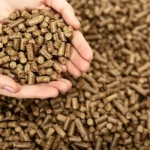
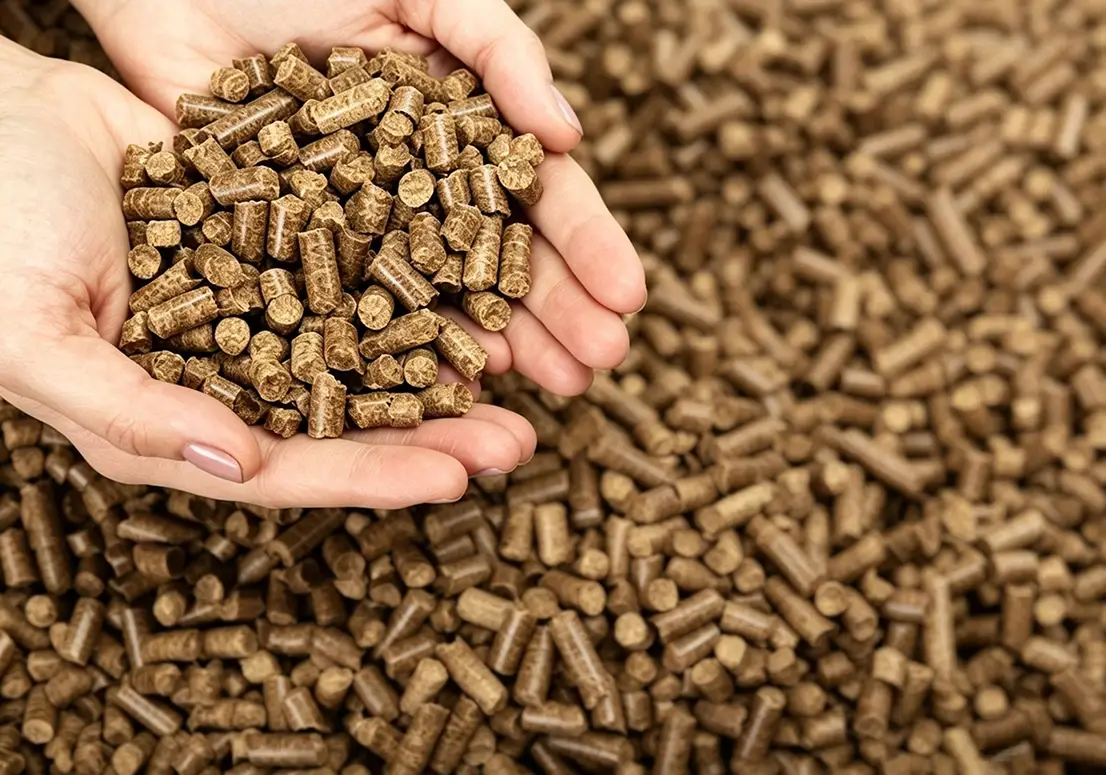
For many palm oil producers, EFB can be difficult to handle because it has high moisture, irregular dimensions, low bulk density, and a fibrous structure. However, these characteristics do not mean that EFB has no value. With appropriate processing technology, EFB can be converted into dense biomass fuel pellets that are easier to store, transport, feed, and use.
The EFB pelletizing process is a series of mechanical and thermal operations designed to transform loose EFB into standardized fuel pellets. A typical process includes raw material preparation, shredding, crushing, drying, fine grinding, pelletizing, cooling, screening, and packaging.
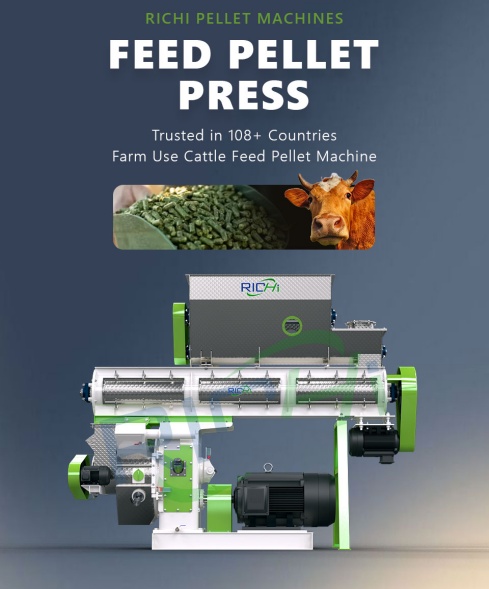
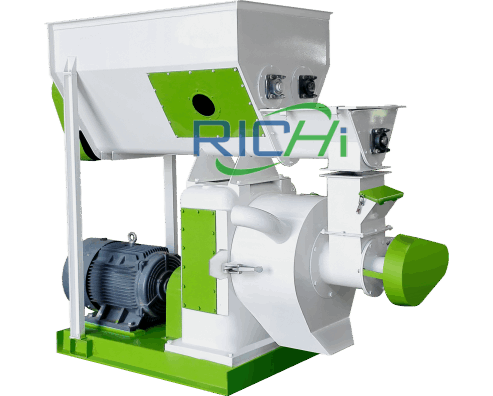
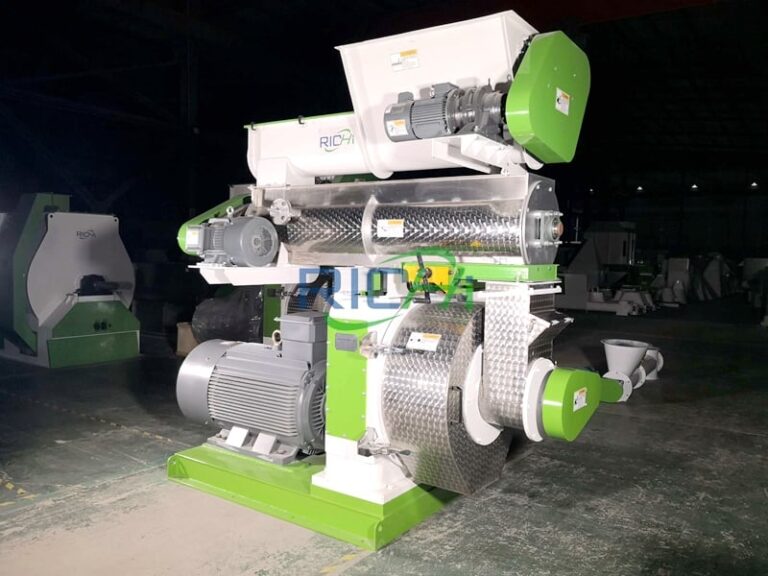
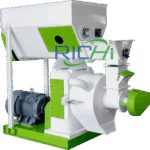
An EFB pellet mill is the core equipment in this process because it compresses prepared EFB fibers through a pellet die to form dense cylindrical pellets. However, the performance of the pellet mill depends heavily on the preparation stages before it. Moisture content, particle size, material feeding, and conditioning all have a direct influence on pellet quality and production efficiency.
Understanding the complete EFB pelletizing process is therefore important for palm oil mills, biomass fuel producers, and investors planning an EFB pellet production project.
What Is EFB?
EFB stands for Empty Fruit Bunch.
It is the fibrous bunch structure left after palm fruits are removed during palm oil processing.
Fresh fruit bunches are delivered to palm oil mills, where they undergo processes such as sterilization and fruit separation. Once the palm fruits have been removed, the empty bunches remain as a biomass residue.
EFB contains significant amounts of lignocellulosic material, including:
- Cellulose
- Hemicellulose
- Lignin
- Fibers
- Moisture
- Mineral components
The exact characteristics of EFB depend on the palm variety, processing technology, storage conditions, and moisture content.
Because EFB is generated directly at palm oil mills, it is often available in large quantities and can provide a local feedstock for biomass fuel production.
Why Is EFB Suitable for Pelletizing?
EFB has several characteristics that make it potentially suitable for biomass pellet production.
First, it is widely available in palm oil-producing regions.
Second, it contains organic fibers that can be compressed into dense pellets.
Third, its natural lignocellulosic components can contribute to binding under suitable pelletizing conditions.
However, raw EFB is not normally suitable for direct pelletizing.
Fresh EFB can be:
- Too wet
- Too large
- Too fibrous
- Difficult to feed
- Low in bulk density
The purpose of the pelletizing process is to modify these physical characteristics.
What Is the EFB Pelletizing Process?
A typical EFB pelletizing process can be described as:
EFB Collection → Cleaning → Shredding → Crushing → Drying → Fine Grinding → Pelletizing → Cooling → Screening → Packaging
Depending on the raw material condition and production capacity, additional equipment may be included.
For example, some plants may require specialized fiber cutters, storage silos, conveyors, dust collection systems, or automatic packing equipment.
The exact process should be customized according to the moisture content, particle size, production capacity, and final pellet specifications.
Step 1 EFB Collection
The first stage is collecting EFB from the palm oil processing facility.
Since EFB is generated as part of the palm fruit processing process, the pellet plant is often located near the palm oil mill.
This can reduce transportation costs and simplify feedstock handling.
At this stage, operators should consider:
- Daily EFB availability
- Moisture content
- Storage conditions
- Foreign materials
- Feeding method
- Transportation distance
Stable raw material supply is essential for continuous pellet production.
Step 2 EFB Cleaning
Before EFB enters the size-reduction system, unwanted materials should be removed.
Foreign materials may include:
- Stones
- Metal
- Soil
- Plastic
- Other contaminants
Removing these materials protects shredders, crushers, grinders, and pellet mills.
A cleaning screen or magnetic separator can be included depending on the quality of the incoming EFB.
The cleaning system should be designed according to the actual contamination level of the raw material.
Step 3 EFB Shredding
EFB is usually too large and irregular to enter a pellet mill directly.
A shredding machine or cutter can break the large bunches into smaller pieces.
The purpose of shredding is to improve:
- Material handling
- Feeding
- Crushing efficiency
- Drying efficiency
- Particle uniformity
Shredding does not necessarily produce the final particle size required for pelletizing.
Instead, it prepares the material for the next processing stage.
Step 4 EFB Crushing
After shredding, EFB can be further processed by a crusher or hammer mill.
The objective is to reduce the fiber size to a level suitable for drying and subsequent pelletizing.
Particle size is important because excessively large fibers may interfere with material flow and pellet formation.
At the same time, grinding material unnecessarily fine can increase energy consumption.
Therefore, the crushing system should be selected according to the requirements of the EFB pellet mill.
Why Particle Size Matters
The EFB pelletizing process relies on compression.
The material must enter the pelletizing chamber in a relatively consistent form so that the rollers can compress it through the die.
If the material contains very long fibers, feeding may become unstable.
If the material is excessively coarse, the pellets may have poor structural integrity.
A suitable particle size improves:
- Feeding stability
- Compression
- Pellet density
- Pellet durability
- Production efficiency
Step 5 EFB Drying
Drying is one of the most important stages of EFB pellet production.
Fresh EFB can contain substantial moisture, which can make pelletizing difficult.
If the material is too wet, the pellet mill may experience:
- Poor pellet formation
- Unstable feeding
- Increased energy demand
- Weak pellets
- Higher moisture in finished products
An industrial rotary dryer machine is commonly used in larger EFB pellet plants.
The dryer uses heated air to remove excess moisture from the biomass.
How the EFB Dryer Works
Inside a rotary dryer, EFB moves through a rotating drum while hot air passes through the material.
The heat transfers moisture from the biomass into the air.
The drying performance depends on:
- Initial moisture
- Target moisture
- Air temperature
- Airflow
- Material feed rate
- Residence time
- Dryer configuration
The objective is not to remove all moisture.
Instead, the material should reach a suitable moisture level for pelletizing.
Why Moisture Control Is Critical
Moisture has a major influence on pellet formation.
If moisture is too high, the material may become difficult to compress properly.
If moisture is too low, the material may not bind effectively and energy consumption during drying may increase unnecessarily.
The ideal moisture range depends on the characteristics of the EFB and the design of the pelletizing system.
Therefore, moisture should be measured and controlled rather than estimated only by appearance.
Step 6 Fine Grinding
After drying, EFB may require further grinding.
A fine grinder or hammer mill can produce a more uniform particle structure.
Fine grinding improves contact between particles during compression.
It can also improve:
- Pellet surface quality
- Pellet density
- Material flow
- Feeding consistency
- Pellet durability
However, grinding should be optimized according to the required pellet size and the performance of the EFB pellet mill.
Step 7 Feeding the EFB Pellet Mill
After the material has reached the required moisture and particle size, it is transported to the pellet mill.
A controlled feeding system is important.
If too much material enters the pellet mill at once, motor load may increase.
If the feeding rate is too low, the machine may not reach its designed production capacity.
A variable-frequency feeder can adjust the material flow according to actual operating conditions.
This creates a more stable pelletizing process.
Step 8 Pelletizing With an EFB Pellet Mill
The pellet mill is the core of the entire process.
An EFB pellet mill compresses prepared biomass through holes in a pellet die.
The basic process is:
Prepared EFB → Feeding → Compression → Die Holes → Pellet Formation → Cutting
Inside the pelletizing chamber, rollers press the material against the die.
The combination of pressure, friction, heat, and suitable moisture causes the biomass particles to bind together.
The compressed material passes through the die holes and forms continuous strands.
A cutting system then produces pellets of the required length.
(Learn more:https://richipelletizer.com/efb-pellet-machine/)
How Natural Lignin Supports Pellet Formation
EFB is a lignocellulosic biomass.
It contains lignin, which can act as a natural binder under suitable processing conditions.
During pelletizing, the combination of pressure and temperature can soften components within the biomass and help particles bond together.
This is one reason why appropriate moisture, particle size, and compression are important.
Chemical binders are not necessarily required for every EFB pellet formula.
However, actual binding performance depends on the raw material and processing conditions.
Choosing the Right Pellet Die
The pellet die determines the diameter of the finished pellets.
Different applications may require different pellet sizes.
Common factors to consider include:
- Pellet diameter
- Die compression ratio
- Material characteristics
- Required production capacity
- Motor load
- Pellet durability
For fibrous EFB, the die should be selected specifically for the material rather than simply using a die designed for another biomass.
An unsuitable compression ratio can lead to unstable production, excessive power consumption, or poor pellet quality.
Ring Die EFB Pellet Mill
For larger industrial applications, ring die pellet mills are often used.
A ring die system can provide continuous production and is suitable for high-capacity biomass pellet plants.
Its advantages can include:
- High production capacity
- Continuous operation
- Stable pellet formation
- Suitable for industrial production
- Integration with automated systems
However, the actual output depends on raw material characteristics, moisture, particle size, die specification, and machine configuration.
Flat Die EFB Pellet Mill
Flat die pellet mills are another option.
They are often associated with smaller-scale production.
A flat die system can have a relatively simple structure and may be suitable for small biomass processing projects.
The choice between flat die and ring die equipment should depend on:
- Required capacity
- Investment budget
- Operating hours
- Automation level
- Production goals
For commercial EFB pellet plants, a ring die solution may be more appropriate when continuous high-volume production is required.
Step 9 Pellet Cooling
Pellets leaving the pellet mill are hot because of compression and friction.
They also contain residual moisture.
They should therefore be cooled before storage or packaging.
A counterflow cooler can reduce pellet temperature while helping stabilize moisture.
Cooling helps:
- Improve pellet durability
- Reduce condensation risk
- Improve storage stability
- Prepare pellets for screening
- Protect packaging materials
The cooler should be matched to the output of the pellet mill.
Step 10 Pellet Screening
After cooling, pellets are screened.
The screening process removes:
- Fines
- Broken pellets
- Oversized particles
- Other unwanted material
Qualified pellets are sent to storage or packaging.
Fines can often be returned to the pellet mill for reprocessing.
This helps improve raw material utilization and reduce production losses.
Step 11 EFB Pellet Packaging
The final stage is packaging or bulk storage.
EFB pellets can be packed in different formats depending on the target market.
Possible packaging methods include:
- Small bags
- Large bags
- Jumbo bags
- Bulk loading
Automatic packing machines can measure and fill each bag according to the required weight.
For commercial production, automated packaging can reduce labor requirements and improve filling accuracy.
What Happens to EFB After Pelletizing?
Pelletizing significantly changes the physical form of EFB.
Compared with loose EFB, pellets are:
- More compact
- More uniform
- Easier to handle
- Easier to transport
- Easier to store
- More suitable for automated fuel feeding
This can increase the practical value of the biomass.
Instead of managing loose palm waste, producers can create a standardized fuel product.
EFB Pellets as Biomass Fuel
EFB pellets can be used as fuel in suitable biomass combustion systems.
Potential applications include:
- Industrial boilers
- Biomass heating systems
- Steam generation
- Drying equipment
- Industrial furnaces
- Other thermal applications
The suitability of EFB pellets depends on their physical and fuel properties as well as the specifications of the combustion system.
Why EFB Pelletizing Can Benefit Palm Oil Mills
Palm oil mills already generate EFB as part of their normal operations.
A pelletizing system can create a more structured way to utilize this biomass.
Potential benefits include:
Reduced Loose Waste
Pelletizing reduces the bulkiness of EFB and provides a productive use for the residue.
Easier Transportation
Dense pellets are easier to transport than loose fibers.
Improved Storage
Uniform pellets are easier to stack and store.
Standardized Fuel
Pellets have more consistent dimensions than loose EFB.
Potential Additional Revenue
If local demand exists, EFB pellets can potentially be sold as biomass fuel.
Factors Affecting EFB Pellet Quality
Several variables influence the final product.
Moisture Content
The material must contain suitable moisture for pellet formation.
Particle Size
Consistent particle size improves compression.
Compression Ratio
The die must provide suitable compression for EFB.
Feeding Rate
Stable feeding helps maintain consistent pellet mill load.
Roller Condition
Worn rollers can negatively affect pelletizing performance.
Die Condition
A damaged or worn die may reduce production efficiency and pellet quality.
Cooling
Insufficient cooling can create storage problems.
Screening
Effective screening improves final product consistency.
Automation in the EFB Pelletizing Process
Automation can improve the stability of a modern EFB pellet plant.
A centralized control system can monitor:
- Raw material feeding
- Dryer temperature
- Material moisture
- Grinder operation
- Pellet mill load
- Cooler operation
- Screening
- Conveying
- Packaging
Automatic controls can also coordinate the machines.
For example, if the pellet mill stops, upstream feeders can stop automatically to prevent material accumulation.
This improves equipment protection and production continuity.
Energy Consumption in EFB Pellet Production
Energy consumption is an important consideration.
The main energy-consuming stages are usually:
- Drying
- Grinding
- Pelletizing
- Cooling
- Material conveying
Drying can be particularly energy-intensive when the incoming EFB has high moisture.
Therefore, efficient dryer design is essential for controlling operating costs.
Proper insulation, optimized airflow, suitable heat sources, and efficient material residence time can help improve drying efficiency.
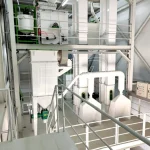
Why a Complete EFB Pelletizing Line Is Better Than a Single Machine
Although the EFB pellet mill is the central machine, pellet production depends on the entire processing system.
A pellet mill cannot compensate for excessively wet material.
Likewise, a high-quality dryer cannot solve problems caused by poor pellet die selection.
The entire production line should be balanced.
A typical industrial line may include:
- EFB receiving system
- Cleaning equipment
- Shredder
- Crusher
- Dryer
- Fine grinder
- Storage hopper
- EFB pellet mill
- Cooler
- Vibrating screen
- Conveyors
- Packing machine
- Dust collection system
- Electrical control system
The equipment configuration should be customized according to the actual project.
How to Choose an EFB Pellet Mill
Before purchasing an EFB pellet mill, investors should evaluate several factors.
Production Capacity
Determine the required hourly output.
Raw Material Moisture
Measure the actual moisture range of the EFB.
Particle Size
Determine the appropriate grinding specification.
Pellet Diameter
Select the pellet size according to the fuel application.
Die Design
Choose an appropriate die compression ratio for EFB.
Motor Power
The motor should match the desired capacity and material characteristics.
Wear Resistance
EFB can be abrasive, so die and roller materials should be selected carefully.
Automation
Determine whether automatic feeding, load control, lubrication, and monitoring are required.
Maintenance
Consider access to wear parts and routine maintenance requirements.
(investigate this site:RICHI Pelletizer)
Designing an EFB Pellet Production Plant
A commercial EFB pellet plant should be designed around actual feedstock conditions.
The design process should begin with an assessment of:
- Available EFB quantity
- Moisture content
- Daily operating hours
- Required pellet capacity
- Pellet specifications
- Fuel market
- Storage requirements
- Packaging requirements
- Factory space
- Energy availability
For example, a palm oil mill generating a large amount of EFB every day may require a continuous high-capacity pelletizing system.
A smaller biomass project may use a simpler configuration.
From Palm Waste to Standardized Fuel
The complete EFB pelletizing process can be summarized as follows:
1. EFB Collection
Palm empty fruit bunches are collected from the palm oil mill.
2. Cleaning
Foreign materials are removed.
3. Shredding
Large bunches are reduced into smaller pieces.
4. Crushing
The fibers are processed into a more suitable particle size.
5. Drying
Excess moisture is removed.
6. Fine Grinding
The material is prepared for efficient compression.
7. Pelletizing
The EFB pellet mill compresses the biomass into dense pellets.
8. Cooling
Hot pellets are cooled and stabilized.
9. Screening
Fines and unsuitable particles are separated.
10. Packaging
Finished EFB pellets are packed or transferred to bulk storage.
This sequence transforms a bulky palm oil residue into a standardized biomass fuel.
Conclusion
The EFB pelletizing process is a combination of mechanical size reduction, moisture control, compression, cooling, screening, and packaging. Each stage contributes to the quality and efficiency of the final fuel.
The process normally begins with EFB collection and cleaning, followed by shredding and crushing. Because fresh EFB often contains considerable moisture, drying is a critical stage. The dried material is then finely ground and fed into an EFB pellet mill, where rollers compress the biomass through a die to produce dense fuel pellets.
After pelletizing, the hot pellets are cooled, screened, and packaged.
The quality of the final product depends on many factors, including raw material characteristics, moisture, particle size, die compression ratio, feeding rate, pellet mill condition, cooling efficiency, and screening performance.
For palm oil mills and biomass fuel producers, EFB pelletizing provides a practical method for converting an abundant processing residue into a more manageable and potentially valuable fuel product. With a properly designed production line, EFB can move from a bulky palm waste material to a standardized biomass fuel that is easier to store, transport, and use in suitable energy applications.