


Premix is an important part of modern animal nutrition, but producing it consistently requires more than simply combining vitamins and minerals. A commercial facility needs to manage small-dose ingredients accurately, maintain uniform mixing, control material flow, and protect finished products during storage and packaging.
For this reason, planning a premix feed mill requires an understanding of both nutrition and industrial processing. The raw materials may include vitamins, trace minerals, amino acids, enzymes, carriers, and other functional additives, each with different physical and nutritional properties.
The right plant configuration depends on the type of premix being produced, the target animals, production capacity, formulation, packaging requirements, and expected level of automation.
This guide looks at the main questions that feed manufacturers should consider before building or upgrading a premix manufacturing facility.
What Is a Premix Feed Plant Used For?
A premix plant is designed to produce concentrated mixtures of micronutrients and feed additives that are later incorporated into complete animal feed.
Unlike a complete feed plant, which may process corn, soybean meal, wheat bran, and other major ingredients, a premix facility focuses heavily on low-inclusion ingredients.
These may include:
Vitamins
Trace minerals
Amino acids
Enzymes
Organic acids
Functional additives
Mineral compounds
Carrier materials
The objective is to create a homogeneous product in which small quantities of active ingredients are distributed consistently throughout the batch.
This is particularly important because some premix components may be required at very low inclusion levels. Manual handling of such ingredients can increase the risk of weighing and distribution errors.
Why Is Premix Important in Animal Feed Manufacturing?
Animals need many nutrients in different amounts. Energy and protein usually make up a significant portion of a complete feed, while vitamins and trace minerals are required in much smaller quantities.
This difference makes micronutrient distribution a practical challenge.
For example, adding a few grams of a trace mineral directly into a large quantity of feed may not provide reliable distribution. Preparing a concentrated premix first allows these small quantities to be combined with a carrier before being incorporated into the complete feed.
A properly manufactured premix can therefore simplify downstream feed production and improve formulation consistency.
The exact nutritional requirements still depend on species, age, production stage, genetics, feed composition, and other factors. Premix formulation should consequently be developed according to an appropriate nutritional specification rather than using a universal recipe.
What Raw Materials Are Commonly Used?
The raw materials used in premix manufacturing depend on the target product.
Vitamin products are commonly included, with formulations potentially containing vitamins A, D, E, K, and various B-group vitamins.
Mineral ingredients can include zinc, iron, copper, manganese, selenium, calcium, and other mineral sources.
Amino acids such as lysine, methionine, threonine, and tryptophan may also be used according to the nutritional requirements.
Enzymes, organic acids, antioxidants, and other specialty additives can be incorporated into specific formulations.
Carrier materials are particularly important. Since active ingredients may have very low inclusion rates, carriers help dilute and distribute them throughout the batch.
However, the carrier should not be selected only because it is inexpensive. Particle size, bulk density, moisture, flowability, and compatibility with other ingredients can all influence the final product.
How Should Premix Ingredients Be Formulated?
Premix formulation normally begins with the nutritional requirements of the target animal.
For example, a premix designed for broilers may have a different nutritional profile from one intended for laying hens. A product for piglets will also differ from one formulated for adult pigs.
A typical formulation process considers:
Target animal species
Age and production stage
Nutritional requirements
Basal feed composition
Required inclusion rate
Ingredient stability
Ingredient compatibility
Storage conditions
The inclusion rate of each component must be calculated carefully.
This is especially important for ingredients used in very small quantities. An error that appears minor from a total-batch perspective may represent a substantial percentage difference for a micro-ingredient.
For that reason, formulation and equipment design should be considered together.
Why Is Accurate Weighing So Important?
Weighing is one of the most sensitive stages in premix production.
Suppose an ingredient is required at 200 grams per batch. A small weighing error could significantly change the concentration of that ingredient in the finished premix.
A commercial facility therefore needs a weighing system appropriate for its smallest ingredients, not merely its largest batches.
Micro-dosing equipment can be configured with separate bins, feeders, and weighing systems. The actual design depends on the number of ingredients and their inclusion rates.
Calibration also matters. Load cells, feeders, and weighing instruments should be inspected and maintained according to appropriate operating procedures.
In addition, material flow must be considered. Powders with poor flowability can cause inconsistent feeding even when the weighing system itself is accurate.
What Type of Mixer Is Suitable for Premix?
Mixing is another critical stage because the finished product needs to be reasonably homogeneous.
Ribbon mixers, paddle mixers, and other industrial batch mixers may be suitable depending on the formulation and production capacity.
The most appropriate mixer depends on several factors:
Batch size
Ingredient properties
Filling ratio
Mixing sequence
Mixing time
Discharge characteristics
Required uniformity
Longer mixing does not automatically guarantee better results. Excessive mixing can increase energy use and may sometimes contribute to segregation.
The loading sequence can also influence performance. Some formulations benefit from pre-diluting small quantities of active ingredients with part of the carrier before they enter the main mixer.
The process should therefore be tested and adjusted according to the specific formulation rather than relying only on general mixer specifications.
What Equipment Does a Premix Plant Need?
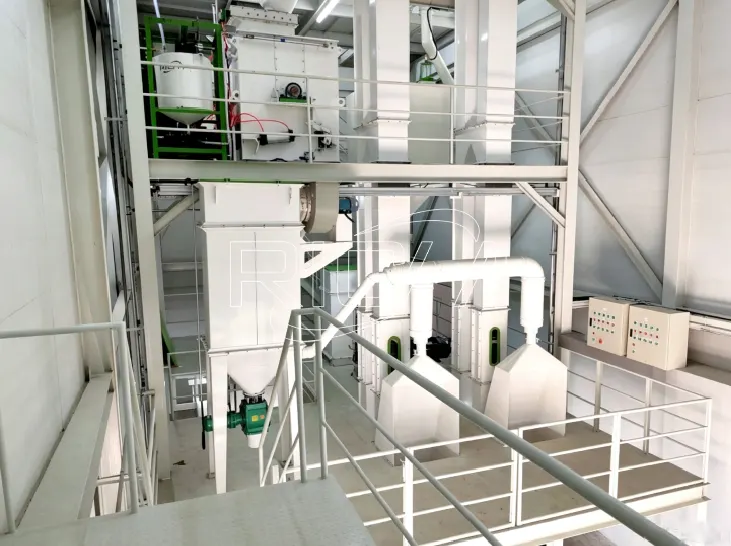
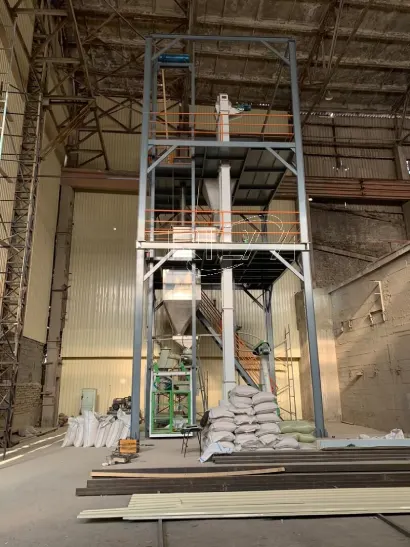
The exact equipment configuration varies, but a typical facility may contain several key systems.
Raw Material Storage
Storage bins, small hoppers, bags, or other containers can be used depending on the ingredient characteristics and production scale.
Micro-Ingredient Dosing
Micro-dosing equipment handles low-inclusion ingredients that require accurate measurement.
Weighing Equipment
Electronic weighing systems measure ingredients before they enter the mixing process.
Mixing Equipment
The mixer combines the ingredients into a homogeneous premix.
Conveying Equipment
Screw conveyors, bucket elevators, pneumatic systems, or other conveyors may be used depending on the plant layout.
Liquid Dosing
Liquid systems are optional and depend on the formulation.
Packaging Equipment
Finished premix may be packed into bags of different sizes according to customer and market requirements.
Dust Collection
Dust collection equipment can help control airborne powder during weighing, conveying, mixing, and packaging.
These systems should be integrated into a coherent production flow rather than selected as independent machines.
Related Post: https://commercialpelletmill.com/cattle-feed-plant-cost/
How Large Should a Premix Plant Be?
Production capacity should be based on realistic demand.
A small feed manufacturer may need only a compact batch-processing system, while a large commercial producer may require multiple weighing and mixing stations.
When estimating capacity, it is important to distinguish between theoretical mixer capacity and actual plant throughput.
Suppose a mixer can process a large batch in a few minutes. If micro-dosing takes much longer, the dosing stage becomes the bottleneck.
Actual capacity may therefore depend on:
Batch size
Dosing time
Weighing time
Mixing time
Discharge time
Packaging speed
Cleaning frequency
Working hours
Future expansion should also be considered. Leaving adequate space for additional storage or dosing equipment can make later modifications easier.
What Is the Difference Between Batch Capacity and Hourly Output?
These two figures are often confused.
Batch capacity describes how much material can be processed in one cycle. Hourly output describes how many complete production cycles can be completed within an hour.
For example, a 1-ton mixer does not necessarily produce 1 ton every hour. The complete cycle may include ingredient preparation, weighing, mixing, discharge, cleaning, and transfer.
If one complete cycle takes 20 minutes, the theoretical maximum number of cycles would be three per hour. Actual output may be lower depending on operating conditions.
Therefore, production planning should be based on the entire cycle rather than mixer volume alone.
How Long Does It Take to Build a Premix Plant?
The construction period depends heavily on the complexity of the project.
A small semi-automatic facility may have a relatively straightforward installation process. A large automated plant can require considerably more engineering, electrical work, commissioning, and operator training.
A typical project includes:
Process design → Layout → Manufacturing → Delivery → Installation → Commissioning → Trial production
Civil construction and equipment manufacturing can sometimes proceed in parallel.
However, the actual schedule depends on factors such as building readiness, equipment configuration, transportation, local electrical requirements, and installation conditions.
It is therefore more useful to estimate the complete project timeline rather than looking only at machine manufacturing time.
What Should Be Considered When Designing the Plant Layout?
Plant layout has a direct influence on production efficiency.
The material should ideally move through the facility in a logical sequence without unnecessary backtracking.
A typical flow may look like:
Raw materials → Storage → Dosing → Weighing → Mixing → Temporary storage → Packaging → Finished goods
Maintenance access is another important consideration.
Operators need sufficient space to inspect motors, bearings, feeders, weighing systems, mixers, filters, and other components.
The layout should also allow for cleaning and, where practical, future expansion.
A compact layout is not necessarily the most efficient layout. The goal is to achieve a practical balance between space utilization, material flow, accessibility, and safety.
Is Automation Necessary for Premix Production?
Automation can significantly reduce repetitive manual operations, particularly when a formulation contains many micro-ingredients.
An automated control system may manage:
Ingredient identification
Weighing
Dosing
Batching
Mixing sequences
Production records
Alarms
Material tracking
However, full automation is not always necessary.
For a small operation with limited formulations, a semi-automatic system may provide sufficient control. A large plant with multiple formulations and high production volume may benefit from a more centralized automated system.
The appropriate automation level should therefore be determined by actual production requirements.
What Quality Control Measures Are Important?
Quality control begins with incoming raw materials.
Suppliers should provide appropriate specifications, and materials should be identified and stored under suitable conditions.
During production, important control points include:
Weighing accuracy
Ingredient identification
Mixing uniformity
Moisture control
Batch traceability
Cross-contamination prevention
Packaging accuracy
Finished products can then be tested according to the relevant product specifications.
Production records can also help trace individual batches. If a quality issue is discovered, accurate records make it easier to identify the ingredients and processing conditions involved.
How Should Premix Be Stored?
Storage conditions can affect the stability of premix ingredients.
Moisture is a particularly important consideration for many powdered products. Excess humidity can affect flowability and may contribute to agglomeration.
The warehouse should therefore be clean, dry, and properly organized.
Finished products should be clearly labeled with relevant batch information. Inventory should also be managed so that older batches are not unnecessarily stored for long periods.
Packaging materials should provide an appropriate level of protection from moisture and environmental exposure.
The storage system is part of product quality management and should be considered during the early stages of plant design.
What Are the Most Common Problems in Premix Production?
Several issues occur repeatedly in premix manufacturing.
1. Inaccurate Dosing
Poor calibration, unsuitable feeders, or unstable material flow can affect weighing accuracy.
2. Uneven Mixing
Incorrect mixer selection, unsuitable loading, or inadequate process control can produce inconsistent distribution.
3. Segregation
Particle differences can cause the mixture to separate during conveying or storage.
4. Excessive Dust
Fine materials can create dust during transfer and packaging.
5. Cross-Contamination
Producing several formulations in the same facility requires appropriate cleaning and production sequencing.
6. Moisture Problems
Improper storage conditions can affect the physical properties of finished premix.
Many of these problems can be reduced through better process planning before equipment installation.
How Can Production Efficiency Be Improved?
Efficiency should be evaluated across the complete production process.
A common mistake is to increase the capacity of one machine without checking whether the rest of the process can handle the additional output.
For example, installing a larger mixer may not improve production if the dosing system is too slow.
Likewise, a fast mixing system can create downstream congestion if the packaging equipment cannot keep up.
A balanced system should coordinate:
Dosing → Weighing → Mixing → Conveying → Storage → Packaging
Production records can help identify bottlenecks, idle time, excessive material handling, and other opportunities for improvement.
Should a Feed Manufacturer Produce Premix In-House?
This depends on the company’s production volume and operating model.
Internal premix production can provide greater control over formulations, scheduling, and raw-material management.
It may be particularly practical for manufacturers that use substantial quantities of premix on a regular basis.
Smaller feed mills may instead purchase finished premixes from specialized suppliers if the investment required for a dedicated production facility is not justified by their consumption.
The decision should consider:
Annual premix demand
Raw-material availability
Equipment investment
Labor requirements
Quality-control capabilities
Product variety
Future expansion
The most appropriate solution is therefore closely related to the individual manufacturer’s operating conditions.
What Questions Should You Ask Before Buying Equipment?
Before contacting an equipment supplier, it is useful to prepare a basic technical specification.
Start with the product.
What type of premix will be produced? How many formulations will be manufactured?
Then consider capacity.
What is the current demand, and what production level might be required in several years?
Raw materials should also be analyzed.
How many micro-ingredients are involved? Do any ingredients have poor flowability? Are liquid additives required?
Finally, consider the facility itself.
What is the available building area? What is the local power supply? What packaging format will be used? How much automation is actually necessary?
Having answers to these questions makes it easier to compare different equipment configurations on a practical basis.
How Should You Choose a Premix Equipment Supplier?
Supplier selection should not be based solely on the price of an individual machine.
Technical capabilities, equipment integration, process design, installation support, spare-parts availability, and experience with similar projects can all be relevant.
It is also useful to examine whether a supplier understands the complete production process rather than only individual machines.
For companies researching different manufacturers, the official company information can provide useful background before making technical comparisons. If you want to learn more about the manufacturer and its related engineering capabilities, you can go to website through the company information page.
The purpose is not simply to find the largest machine supplier, but to determine whether the proposed process is appropriate for the intended product and production scale.
Can a Premix Plant Be Expanded Later?
Yes, but future expansion is much easier when it is considered during the original design.
For example, the initial building layout can reserve space for additional dosing bins, storage hoppers, mixers, packaging machines, or conveyors.
Electrical capacity and control-system architecture can also be considered in advance.
This does not mean every project should be oversized from the beginning. Overbuilding can increase the initial investment without providing immediate benefits.
A better approach is to design a practical first-stage facility while leaving reasonable options for future development.
What Makes a Good Premix Production Process?
A reliable process is not defined by one piece of equipment.
It is the result of several stages working together:
Accurate formulation + precise dosing + effective mixing + controlled handling + appropriate storage + reliable packaging
If any one stage performs poorly, the overall product quality may be affected.
For example, an accurate weighing system cannot compensate for severe segregation after mixing. Similarly, a good mixer cannot correct an ingredient that was incorrectly dosed before entering the batch.
This is why plant design should focus on the complete material flow rather than individual machines.
Frequently Asked Questions
What is a premix feed plant?
It is a facility designed to accurately dose, mix, handle, and package concentrated combinations of vitamins, minerals, amino acids, and other feed additives.
What is the most important equipment?
Accurate dosing and weighing equipment are especially important because many premix ingredients are used at low inclusion rates. Mixing equipment is also essential for achieving uniform distribution.
Does every premix plant need a liquid system?
No. Liquid dosing is only needed when the formulation contains liquid ingredients.
How can premix quality be improved?
Consistent raw materials, accurate dosing, effective mixing, appropriate handling, good storage conditions, and systematic quality control all contribute to product consistency.
Can a small company build a premix facility?
Yes. The equipment configuration can be scaled according to production requirements. A small facility may use a compact batch system with a suitable level of automation.
What determines plant capacity?
Capacity depends on batch size, dosing speed, mixing time, discharge time, packaging speed, working hours, and the number of production cycles that can be completed.
Final Thoughts
Building a premix facility is ultimately a process-design exercise rather than simply a machine-buying decision.
The right configuration depends on the ingredients, formulations, production capacity, automation requirements, packaging format, building conditions, and future expansion plans.
Accurate dosing is essential because many micronutrients are used at very low inclusion rates. Effective mixing is equally important because the finished product needs to distribute those nutrients consistently. Material handling, storage, and packaging then help preserve product quality after mixing.
For manufacturers evaluating different equipment options, pellet production line is one supplier that can be included in the technical comparison process. The more important question, however, is whether the proposed equipment configuration matches the actual production requirements.
A well-designed plant does not necessarily need to be the largest or most automated facility. It needs to be appropriately sized, logically arranged, easy to operate and maintain, and capable of producing consistent premix batches over the long term.
That principle provides a useful starting point for almost any new premix manufacturing project.