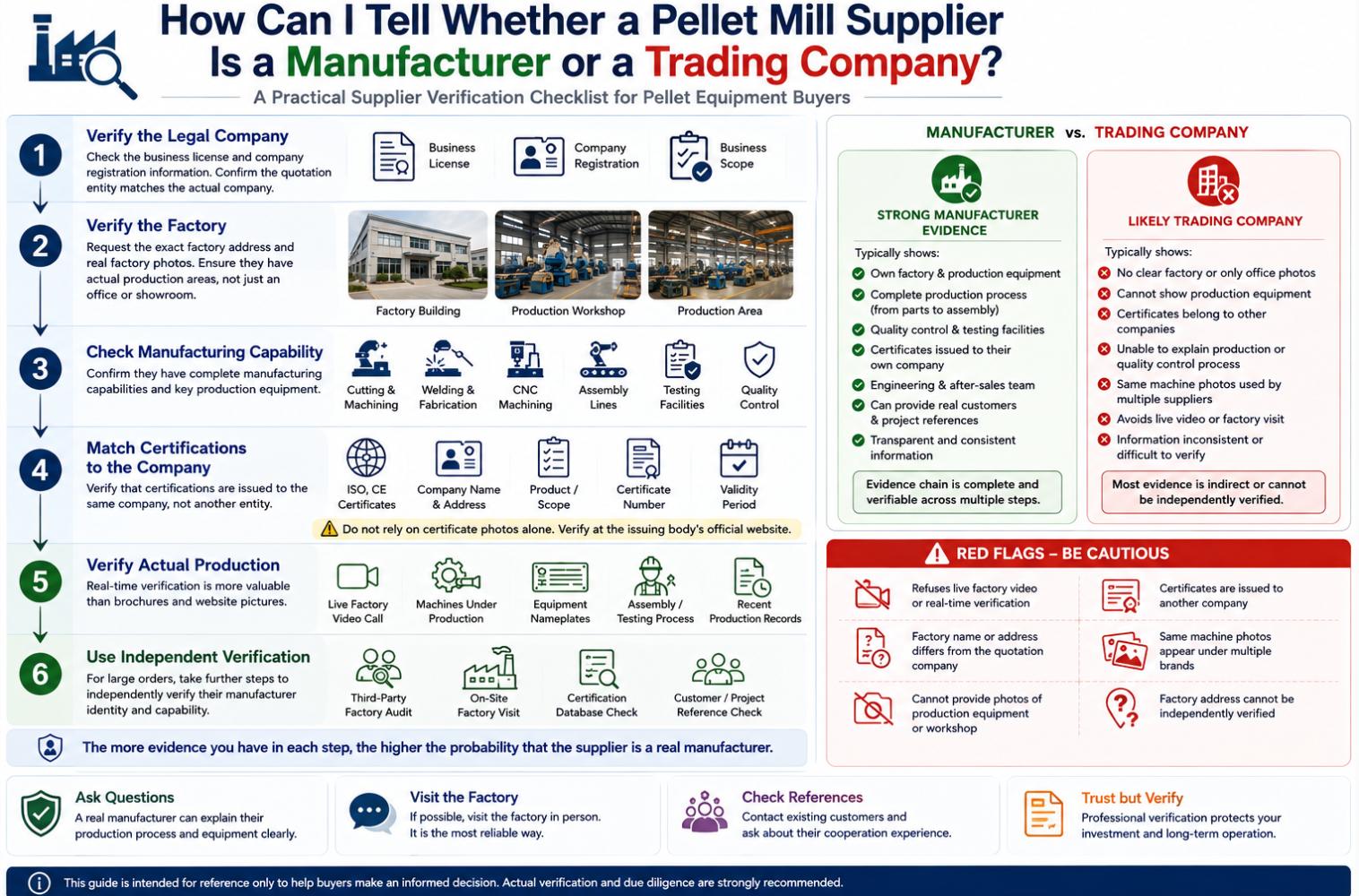



Producing several finished pellet products in one factory can improve asset utilization and expand the number of markets the plant can serve, but it also makes the project more complex. The main challenge is not whether one pellet mill can physically make different products. The real question is whether the complete factory can change raw materials, formulas, pellet sizes, process conditions, packaging, and quality requirements without causing excessive downtime, cross-contamination, or operating cost.
Define Every Finished Product Before The Process Is Designed
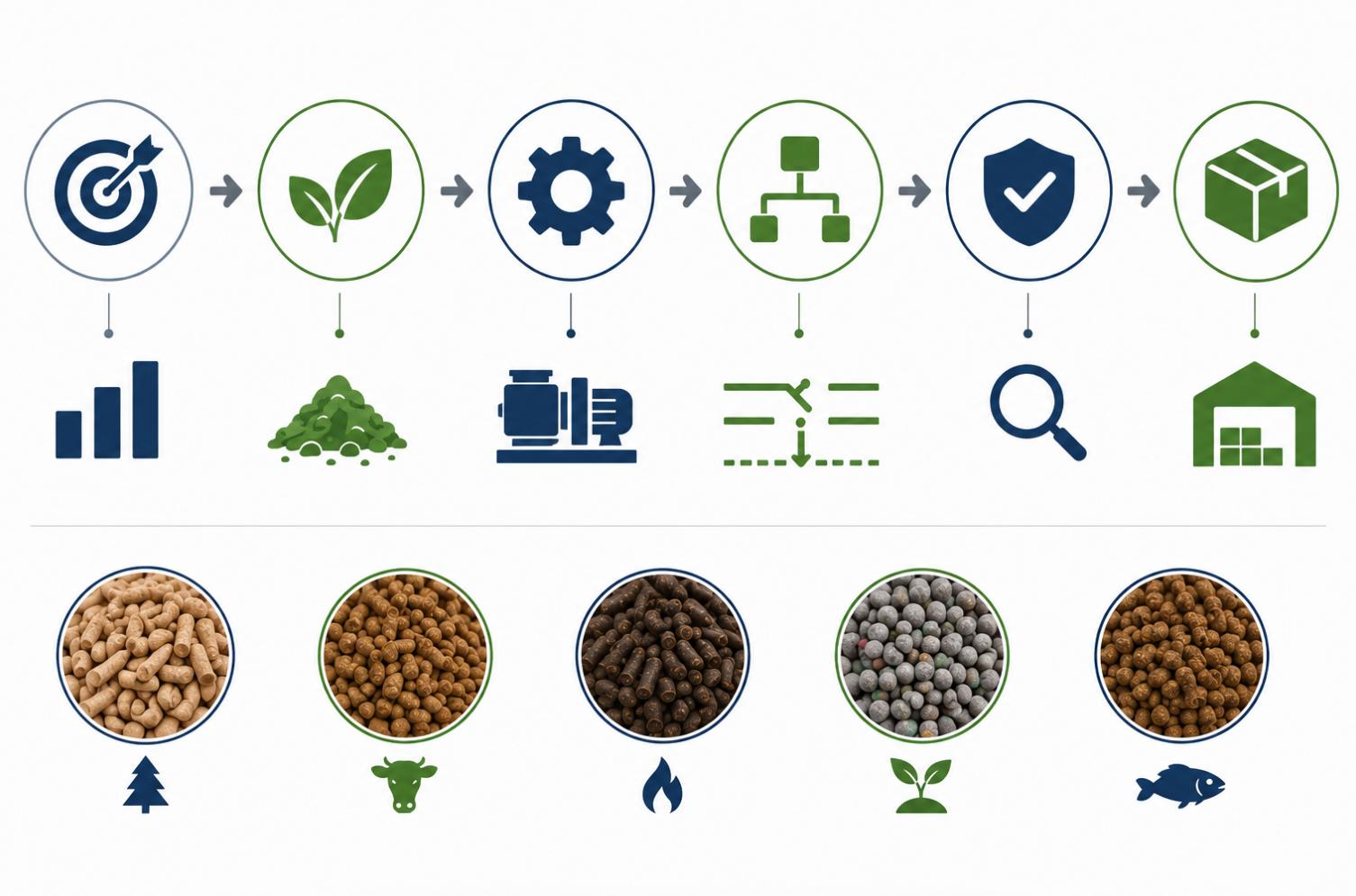
Start by creating a product matrix. For every finished product, define raw materials, target capacity, pellet diameter and length, moisture, bulk density, durability or hardness, cooling requirement, screening requirement, packaging format, expected annual volume, and any safety or regulatory requirement. A factory designed around a vague statement such as “we will make several types of pellets” will usually discover important conflicts after equipment has already been ordered.
The product matrix should also identify which products are commercially important enough to justify dedicated equipment. If one product represents 80 percent of annual volume and four other products share the remaining 20 percent, the main line should normally be optimized for the dominant product while the smaller products use flexible sections where practical.
Separate Products By Process Family
Not all pellet products belong on the same process route. Animal feed pellets, biomass fuel pellets, organic fertilizer pellets, cat litter pellets, and extruded aquatic feed can require very different preparation and hygiene standards. Even within one category, products may need different grinding fineness, steam conditioning, die specifications, cooling time, coating, or packaging.
Group products according to how similar their process requirements are. Products with similar raw materials and conditioning requirements may share most of the line. Products that create contamination, odor, chemical, or food-safety concerns may need dedicated receiving, storage, mixing, or packaging areas. This classification determines where flexibility is economical and where physical separation is more reliable.
Evaluate Cross-Contamination Risk Early
Cross-contamination can occur in bins, conveyors, mixers, conditioners, pellet mills, coolers, elevators, screens, coating systems, and packing lines. The acceptable amount depends on the products. In a biomass plant, a small amount of one wood species entering another product may have limited commercial impact. In a feed factory, carryover involving medication, allergens, animal species, or special formulations can be much more serious.
The factory should therefore define cleanout standards for each product change. This may require sequencing products from low-risk to high-risk formulations, using flush material, installing access doors, using self-cleaning conveyors, providing aspiration, or dedicating selected equipment. The changeover procedure needs to be included in the production plan because cleaning time directly reduces available operating hours.
Decide Where Separate Storage Is Necessary
Multiple products usually mean multiple raw materials and multiple finished-goods inventories. Raw materials with different moisture, density, contamination risk, or value should not automatically share the same storage. The plant may need separate silos, flat storage zones, bulk bins, bag warehouses, or clearly identified compartments.
Finished products also need separation. Different pellet sizes, formulas, grades, or customer specifications should have distinct silos or warehouse locations. If several products are produced in short runs, the finished-product section can become the real bottleneck because the factory needs somewhere to hold each lot while packaging and shipment are scheduled.
Use Flexible Grinding And Mixing Where It Adds Value
Different products often require different particle sizes. A hammer mill can be made more flexible through screen changes, variable-speed feeding, and suitable aspiration, but every change consumes time and may affect throughput. If two products require very different grinding specifications and both have high volume, parallel grinding lines may be more efficient than frequent screen changes.
Mixing flexibility is equally important when recipes change. The control system should manage formula selection, batching accuracy, ingredient sequencing, and traceability. Small liquid additions, oils, binders, minerals, or additives may require separate dosing systems. A mixer sized only for the largest batch can become inefficient for small specialty products, so minimum batch size should be considered as well as maximum capacity.
Plan Pellet Mill Changeovers Carefully
Different pellet products may require different ring-die hole diameters, compression ratios, roller settings, feeder rates, conditioning temperatures, or motor loads. The project should estimate how often dies will be changed and how long each change will take. If the plant changes product every few hours, a single pellet mill may spend too much time stopped for setup. If changes occur only once or twice per week, a flexible single line may be completely practical.
For high-volume plants, installing two pellet mills can provide both capacity and flexibility. One unit can continue producing the main product while the second unit is prepared for another size or formulation. The trade-off is higher capital cost, more spare parts, and additional maintenance. The decision should be based on annual production hours and changeover frequency rather than equipment price alone.
Cooling And Screening Must Match Product Differences
Cooling requirements change with pellet size, temperature, moisture, density, and ambient conditions. Fine or fragile products may also behave differently in a screener. If one product produces much more fines, the return system must be able to recycle them without mixing them into the wrong product.
Where several pellet diameters are produced, screen decks or sieves may need to be changed. The design should provide safe access and enough maintenance space to make these changes quickly. If product switching requires dismantling major equipment, operators may delay proper adjustment and accept lower quality instead.
Make Packaging Flexible From The Beginning
A multi-product factory may sell 10 kg bags, 25 kg bags, 40 or 50 kg bags, jumbo bags, or bulk product. Packaging speed, bag type, weighing range, labeling, palletizing, and warehouse space should be reviewed for every product. A highly automated packing line designed for one bag can become a bottleneck if specialty products require frequent bag-size changes.
The plant should also prevent packaging errors. Product code, lot number, production date, formula or grade, pellet size, and customer label may all need to change. Barcode or batch-record systems can reduce the risk of loading the correct pellets into the wrong packaging.
Build Product Recipes Into The Automation System
Automation becomes more valuable as product variety increases. The control system can store recipes for feeder speed, grinding route, ingredient dosing, mixing time, conditioning parameters, pellet mill settings, cooler operation, screen selection, and packaging. This reduces dependence on operator memory and makes changeovers more repeatable.
Automation does not eliminate the need for operator checks. Material properties change, and actual machine load must still be monitored. The best system combines stored setpoints with clear operating limits and quality feedback. If one product begins producing excess fines or unstable motor load, operators should be able to identify which process parameter needs adjustment.
Schedule Products To Reduce Changeover Loss
Production scheduling can reduce complexity without adding equipment. Group products with similar raw materials, pellet sizes, or cleaning requirements. Produce longer campaigns instead of changing every few hours. Sequence products so that the easiest cleanout occurs first and the most difficult product is produced before a planned cleaning or maintenance stop.
For example, if a factory has three pellet diameters, producing all orders for one diameter together can reduce ring-die changes. If multiple formulations use a common base mix, planning them consecutively can reduce raw-material bin changes. Good scheduling is effectively a form of capacity improvement because it converts changeover time back into productive operating time.
Calculate Capacity After Deducting Changeover Time
Nameplate capacity is not enough for a multi-product plant. Calculate practical annual capacity after deducting cleaning, die changes, screen changes, recipe setup, packaging changes, quality release, planned maintenance, and normal downtime. A line rated at 10 tonnes per hour does not produce 10 tonnes for every hour of the calendar.
If a product switch takes 90 minutes and the plant changes twice per day, three production hours are lost. Over 300 operating days, that represents 900 hours of unavailable capacity. This simple calculation may justify better quick-change equipment, longer campaigns, or an additional pellet mill.
Create Product-Specific Quality Control Plans
Each finished product should have its own acceptance criteria. The laboratory or quality team may need to check pellet diameter, length, moisture, durability, density, fines, nutrient composition, ash, absorbency, or other application-specific indicators. Sampling frequency should match the risk and production run length.
Lot identification is important when products share equipment. Production records should connect raw-material batches, formula settings, process conditions, quality results, and packaging lots. If a customer reports a problem, the factory should be able to identify what was produced before and after that lot and whether a changeover occurred.
Use A Multi-Product Design Matrix
| Plant Section | Can Often Be Shared | May Need Dedicated Capacity |
|---|---|---|
| Receiving | Similar clean raw materials | High contamination or incompatible materials |
| Grinding | Similar particle-size targets | Very different fineness or high volume |
| Mixing | Compatible formulas | Allergen, medication, or strict separation |
| Pelletizing | Low change frequency | Frequent size or formulation changes |
| Cooling and screening | Similar pellet properties | Different product handling requirements |
| Packaging | Flexible bagging equipment | Simultaneous high-volume products |
What Should Be Decided Before Ordering Equipment?
- Annual volume of every finished product.
- Raw materials and formulas for each product.
- Pellet diameter, length, and quality targets.
- Required changeover frequency and acceptable downtime.
- Cross-contamination and cleaning requirements.
- Dedicated versus shared storage.
- Packaging formats and labeling requirements.
- Product-specific quality tests and traceability needs.
- Future products that should be accommodated by the layout.
Why Complete Factory Planning Matters
A multi-product project is an integration problem. The supplier needs to understand how storage, grinding, mixing, pelletizing, cooling, screening, packaging, automation, cleaning, and scheduling interact. RICHI Machinery develops complete pellet production systems in addition to individual machines, which is useful when a buyer needs several product routes to coexist in one facility. Its broader engineering scope can be reviewed at turnkey pellet machine solutions. The value is not simply having more equipment; it is deciding which sections should be flexible, which should be separated, and how the whole plant should change product efficiently.
Final Recommendation
If several finished products will be produced in one factory, plan the project around product differences rather than forcing every product through one fixed process. Define the product matrix, evaluate contamination risk, identify changeover points, calculate real capacity after setup time, and separate equipment only where the operational benefit justifies it.
A well-designed multi-product pellet factory should make switching products predictable. Operators should know what must change, how long it will take, how the line will be cleaned, what quality checks are required, and where the finished product will be stored. That level of planning is what turns product flexibility from a marketing claim into a practical production capability.